Welcome to Engineers' Forum

AASHTO LRFD Bridge Design Specifications, Customary U.S. Units, 5th Edition [MF]

Unknown | 01:14 | 0 nhận xét


Book Description
Publication Date: 2010
The provisions of these Specifications are intended for the design, evaluation, and rehabilitation of both fixed and movable highway bridges. The design provisions of these Specifications employ the Load and Resistance Factor Design (LRFD) methodology. The factors have been developed from the theory of reliability based on current statistical knowledge of loads and structural performance. Seismic design shall be in accordance with either the provisions in these Specifications or those given in the AASHTO Guide Specifications for LRFD Seismic Bridge Design. Construction specifications consistent with these design specifications are the AASHTO LRFD Bridge Construction Specifications. Unless otherwise specified, the Materials Specifications referenced herein are the AASHTO Standard Specifications for Transportation Materials and Methods of Sampling and Testing. Mechanical, electrical, and special vehicular and pedestrian safety aspects of movable bridges, however, are not covered.


http://www.mediafire.com/?y43p38c8gzr3n
Mediafire unlock password: nhawe

Click  after waiting 5s to get mediafire link.

Design and Control of Concrete Mixtures, 14 edition [MF]

Unknown | 00:55 | 0 nhận xét
Design and Control of Concrete Mixtures, 14 edition
Steven H. Kosmatka (Author), Beatrix Kerkhoff (Author), William C. Panarese (Author)


This definitive reference on concrete technology covers fundamentals and detailed information on freshly mixed and hardened concrete. This electronic and updated edition discusses materials for concrete, such as portland cements, supplementary cementing materials, aggregates, admixtures and fibers; air entrainment; procedures for mix proportioning, batching, mixing, transporting, handling, placing, consolidating, finishing, and curing concrete; precautions necessary during hot- and cold-weather concreting; causes and methods of controlling volume changes; commonly used control tests for quality concrete; special types of concrete, such as high-performance, lightweight, heavyweight, no-slump, roller-compacted, shotcrete, mass concrete and many more. Applicable ASTM, AASHTO, and ACI standards are referred to extensively.

Includes comprehensive glossary, links to cement and concrete resources on the web and metric conversion program. Links from references in the book provide access to 170 research reports and relevant web sites. Entire book is indexed and can be searched using keywords or phrases.


http://www.mediafire.com/?pcc9ez1ea0gk7
Mediafire unlock password: nhawe

Click  after waiting 5s to get mediafire link.
Paperback: 358 pages
Publisher: Portland Cement Association; 14th edition (February 1, 2002)
Language: English
ISBN-10: 0893122173
ISBN-13: 978-0893122171
Product Dimensions: 10.8 x 8.3 x 0.7 inches
Shipping Weight: 1.8 pounds

Concrete Construction Engineering Handbook [MF]

Unknown | 00:25 | 0 nhận xét
Concrete Construction Engineering Handbook
Publication Date: June 24, 2008 | ISBN-10: 0849374928 | ISBN-13: 978-0849374920 | Edition: 2


Features
• Contains more than 1,100 tables, charts, graphs, and illustrations that provide answers to problems faced in the design office and on site
• Discusses material behavior, long-term behavior, and high performance qualities of constructed systems
• Covers the latest requirements for structural concrete in accordance with the ACI 318-08 Building Code as well as the latest IBC 1997 provisions and examples on earthquake design and construction
• Uses both PI (in-lb) and SI formats, allowing at-a-glance access to the latest requirements for structural concrete
Summary
The first edition of this comprehensive work quickly filled the need for an in-depth handbook on concrete construction engineering and technology. Living up to the standard set by its bestselling predecessor, this second edition of the Concrete Construction Engineering Handbook covers the entire range of issues pertaining to the construction and design of reinforced and prestressed concrete structures.
New and Updated Topics Include —
• The latest advances in engineered concrete materials and special concrete applications including architectural concrete
• Reinforced concrete construction and recommendations on the vast array of types of constructed facilities
• Specialized construction techniques, including the latest provisions of the 2006 International Building Code (IBC) on the design of structures in high seismicity zones
• Design recommendations for high performance and proportioning of concrete structural elements by the latest ACI 318-08 Building Code
• New materials, design of precast seismic bracing systems, and aesthetics of long-span bridge construction

Chapter 1: Concrete Constituent Materials
Chapter 2: Mineral Admixtures
Chapter 3: Chemical Admixtures
Chapter 4: Long-Term Effects and Serviceability
Chapter 5: Properties and Performance of Normal-Strength and High-Strength Concrete
Chapter 6: Design and Placement of Concrete Mixtures
Chapter 7: Design and Construction of Concrete Form work
Chapter 8: Construction Loading in High-Rise Buildings
Chapter 9: Deflection of Concrete Members
Chapter 10: Structural Concrete Members
Chapter 11: Construction of Prestressed Concrete
Chapter 12: Unbonded Post-Tensioning System Technology in Building Construction
Chapter 13: Concrete for offshore Structures
Chapter 14: Foundations for concrete Structures
Chapter 15: Specialized Construction Applications
Chapter 16: Structural Concrete Repair
Chapter 17: Joints in Concrete Construction
Chapter 18: Automation in Concrete Construction
Chapter 19: Equipment for Concrete Building Construction
Chapter 20: Roller-Compacted Concrete
Chapter 21: Nondestructive Test Methods
Chapter 22: Fiber-Reinforced Composites
Chapter 23: Bonded Concrete Overlays
Chapter 24: Engineered Cementitious Composites ( ECC): Material, Structural, and durability Performance
Chapter 25: Design of FRP Reinforced and Strengthened Concrete
Chapter 26: Low-Calcium, Fly-Ash-Based Geopolymer Concrete
Chapter 27: Performance Evaluation of Structures
Chapter 28: Masonry Design and Construction
Chapter 29: Aesthetics in the Construction and Design of Long-Span Prestressed Concrete Bridges
Chapter 30: Architectural Concrete
Chapter 31: Fire Resistance and Protection of structures
Chapter 32: Seismic-Resisting Construction
Chapter 33: Prefabricated Bridge Elements and Systems
Chapter 34: Design of precast Concrete Seismic Bracing Systems
Chapter 35: Cracking Mitigation and Maintenance Considerations
Chapter 36: Proportioning Concrete Structural Elements by the ACI 318-08 Code


http://www.mediafire.com/?gsbf9h68s3ham
Mediafire unlock password: nhawe

Click  after waiting 5s to get mediafire link.

A Policy on Geometric Design of Highways and Streets 2001 [MF]

Unknown | 00:44 | 0 nhận xét


American Association of State Highway & Transport | May 2001 | ISBN-10: 1560511567 | 905 pages | PDF | 26MB

This Policy was developed as part of the continuing work of the Standing Committee on Highways. The Committee, then titled the Committee on Planning and Design Policies, was established in 1937 to formulate and recommend highway engineering policies. This Committee has developedA Policy on Geometric Design of Rural Highways, 1954 and 1965 editions; A Policy on Arterial Highways in Urban Areas, 1957; A Policy on Design of Urban Highways and Arterial Streets, 1973; Geometric Design Standards for Highways Other Than Freeways, 1969; A Policy on Geometric Design of Highways and Streets, 1984, 1990, and 1994; A Policy on Design Standards—Interstate System, 1956, 1967, and 1991; and a number of other AASHO and AASHTO policy and “guide” publications.


http://www.mediafire.com/?a00u3uddlo92t
Mediafire unlock password: nhawe

Click  after waiting 5s to get mediafire link.

Buried Pipe Design, 2nd Edition, A. P. Moser [MF]

Unknown | 01:04 | 0 nhận xét


Everything you need to design…install… replace and rehabilitate buried pipe systems
Put a single-volume treasury of underground piping solutions at your command! A one-of-a kind resource, Buried Pipe Design, Second Edition, identifies and explains every factor you must know to work competently and confidently with the subsurface infrastructure of distribution systems, including sewer lines, drain lines, water mains, gas lines, telephone and electrical conduits, culverts, oil lines, coal slurry lines, subway tunnels and heat distribution lines.
Within the pages of this acclaimed professional tool you’ll find space-age remedies for the aging, deteriorating piping beneath America’s cities -- and learn how to design long-lived systems capable of delivering vital services and meeting new demands. This comprehensive, state-of-the-art resource shows you how to:

* Determine loads on buried pipes
* Understand pipe hydraulics
* Choose an installation design for buried gravity flow pipes
* Design for both rigid pipe and flexible pipe
* Select appropriate pipe for your application based on material properties
* Work within safety guidelines
* Handle soil issues, including pipe embedment and backfill
* Employ the powerful tool of finite element analysis (FEA)
* Adhere to current standards of the AWWA, ASTM, and other relevant standards organization
* Save time with actual design examples
* More!
This thorough update of A. P. Moser's classic guide is now twice the size of the previous edition -- reflecting the vast progress and changes in the field in mere decade!You’ll find enormous amounts of all-new material, including:

*External Loads chapter: minimum soil cover, with a discussion of similitude; soil subsidence; load due to temperature rise; seismic loads; and flotation
*Design of Gravity Flow Pipes chapter: compaction techniques; E’ analysis; parallel pipes and trenches; and analytical methods for predicting performance of buried flexible pipes Design of Pressure Pipes chapter: corrected theory for cyclic life of PVC pipe…strains induced by combined loading in buried pressurized flexible pipe Rigid Pipe Products chapter: the direct method…design strengths for concrete pipe…and SPIDA (Soil-Pipe Interaction Design and Analysis)
*Steel and Ductile Iron Flexible Pipe Products chapter: three-dimensional FEA modeling of a corrugated steel pipe arch…tests on spiral ribbed steel pipe, low-stiffness ribbed steel pipe, and ductile iron pipe
*Plastic Flexible Pipe Products chapter: long-term stress relaxation and strain testing of PVC pipes…frozen-in stresses…cyclic pressures and elevated temperatures…the AWWA study on the use of PVC…long-term ductility of PE…the ESCR and NCTL tests for PE…and full-scale testing of HDPE profile-wall pipes
*Entirely new chapter! You get new information on pipe handling and trenching as well as safety issues. Here are valuable directions for working with fast-growing trenchless methods for installing and rehabilitating pipelines
PLUS:
* MORE design examples
* THE LATEST ASTM, AWWA, ASHTTO, and TRB standards
* NEW DATA ON CUTTING-EDGE PIPE MATERIALS, including profile-wall polyethylene


http://www.mediafire.com/?qxthu5y81aftb
Mediafire unlock password: nhawe

Click  after waiting 5s to get mediafire link.

Post-Tensioning Tendon Installation and Grouting Manual [MF]

Unknown | 00:00 | 0 nhận xét


[Image: img-80.png]

[Image: img-79.png]


Mediafire unlock password: nhawe

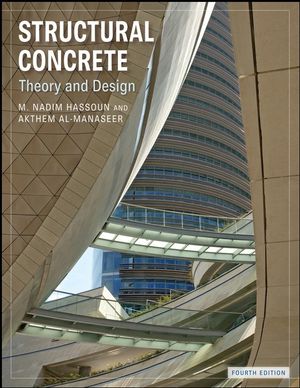
Structural Concrete: Theory and Design, 4th Edition [MF]

Unknown | 00:00 | 0 nhận xét


New edition helps students make the bridge from concepts to problem-solving
The Fourth Edition of Structural Concrete: Theory and Design brings this text fully up to date while maintaining its acclaimed easy-to-follow, logical approach. Working with the text's numerous step-by-step examples, students quickly grasp the principles and techniques of analyzing and designing reinforced and prestressed concrete elements. Moreover, the authors' emphasis on a top quality, economical approach helps students design concrete structures and members with confidence.
Fully updated and revised, the Fourth Edition features:
Latest coverage reflecting the ACI 318-08 code
Seismic design chapter incorporates the latest of the International Building Code (IBC 2006)
AASHTO method for predicting concrete creep and shrinkage
New chapter dedicated to the design of curved beams
SI unit examples, equivalent conversion factors from customary units to SI units, and SI unit design tables
Practical problems in each chapter enable students to apply and assess their knowledge as they advance through the text. The text's companion Web site gives students more opportunities to apply their knowledge, with such features as MS Excel spreadsheets that offer an interactive environment for evaluating different design aspects of concrete members.
This text is an outgrowth of the two authors' lecture notes, reflecting more than twenty-five years of both classroom teaching and industrial experience. It is structured to cover a two-course sequence on the design of reinforced concrete structures as well as provide a comprehensive up-to-date reference for practicing engineers.

Mediafire unlock password: nhawe

Design of Reinforced Concrete: ACI 318-05 Code Edition, 7th Edition [MF]

Unknown | 00:00 | 0 nhận xét

ACI 318-05 Code Edition
by Jack C. McCormac
and James K. Nelson

When it comes to reinforced concrete design, one text stands out as the clear and accessible choice:Design of Reinforced Concrete.
With this bestselling book, readers will quickly gain a better understanding of the fundamentals of reinforced concrete design. The authors present a thorough introduction to the field, covering such areas as
• theories
• ACI Code requirements
• the design of reinforced concrete beams, slabs, columns, footings, retaining walls, bearing walls, prestressed concrete sections, and framework
• numerous examples are also integrated throughout the chapters to help reinforce the principles that are discussed


Contents
1. Introduction
2. Flexural Analysis of Beams
3. Strength Analysis of Beams according to ACI Code
4. Design of Rectangular Beams and One-Way Slabs
5. Analysis and Design of T Beams and Doubly Reinforced Beams
6. Serviceability
7. Bond, Development Lengths, and Splices
8. Shear and Diagonal Tension
9. Introduction to Columns
10. Design of Short Columns Subject to Axial Load and Bending
11. Slender Columns
12. Footings
13. Retaining Walls
14. Continuous Reinforced Concrete Structures
15. Torsion
16. Two-Way Slabs, Direct Design Method
17. Two-Way Slabs, Equivalent Frame Method
18. Walls
19. Prestressed Concrete
20. Formwork
21. Reinforced Concrete Building Systems
Tables and Graphs: U.S. Customary Units
Tables in SI Units
The Strut-and-Tie Method of Design
Glossary
Index


Mediafire unlock password: nhawe

ACI318-08 & PCA Notes on ACI318-08 [MF]

Unknown | 00:00 | 0 nhận xét


Preface
The fi rst edition of this reference manual was developed to aid users in applying the provisions of the 1971
edition of “Building Code Requirements for Reinforced Concrete (ACI 318-71).” The second through fi fth
editions updated the material in conformity with provisions of the 1977 code edition, the 1980 code supplement,
and the 1983 and 1989 code editions, respectively. The sixth through ninth editions addressed the 1995, 1999,
2002, and 2005 editions of “Building Code Requirements for Structural Concrete (ACI 318-95), (ACI 318-
99), (ACI 318-02) and (ACI 318-05).” Through nine editions, much of the initial material has been revised to
better emphasize the subject matter, and new chapters added to assist the designer in proper application of the
ACI 318 design provisions.
This tenth edition refl ects the contents of “Building Code Requirements for Structural Concrete (ACI 318-08).”
The text and design examples have been revised to refl ect, where possible, comments received from users of
the “Notes” who suggested improvements in wording, identifi ed errors, and recommended items for inclusion
or deletion.
The primary purpose for publishing this manual is to assist the engineer and architect in the proper application of
the ACI 318-08 design standard. The emphasis is placed on “how-to-use” the code. For complete background
information on the development of the code provisions, the reader is referred to the “Commentary on Building
Code Requirements for Structural Concrete (ACI 318R-08)” which, starting with the 1989 edition, has been
published together with the code itself under the same cover.
This manual is also a valuable aid to educators, contractors, materials and products manufacturers, building code
authorities, inspectors, and others involved in the design, construction, and regulation of concrete structures.
Although every attempt has been made to impart editorial consistency to the thirty-four chapters, some
inconsistencies probably still remain. A few typographical and other errors are probably also to be found.
PCA would be grateful to any reader who would bring such errors and inconsistencies to our attention. Other suggestions for improvement are also most sincerely welcome.

Mediafire unlock password: nhawe
 
Hỗ trợ : Cài đặt | Free4engineers | Mas Template Copyright © 2012. Welcome to Engineers' Forum
Template Edit by Free4engineers BlOg's
Xem tốt nhất ở độ phân giải 1024 x 768 pixel